
Food Noise App When the Problem Isn't What You're Eating
Food Noise App: When the Problem Isn't What You're Eating
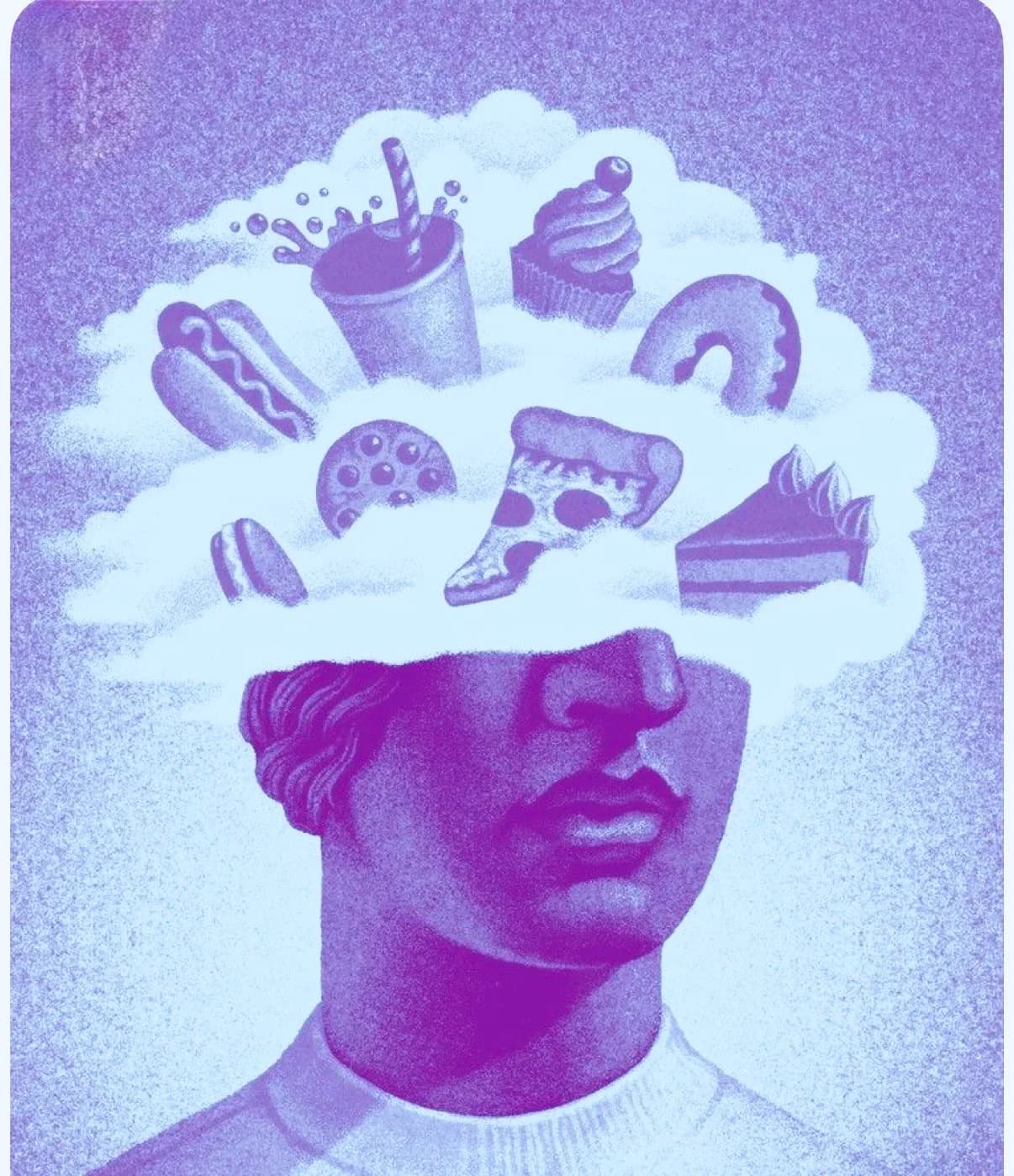
It is Tuesday at 10am. You ate a good breakfast two hours ago. You are not hungry. But you are already thinking about lunch, specifically what you are going to have, whether the place near the office does that salad on Tuesdays, and whether you should get the side or just the main. By 11am you have checked the menu. By noon you have eaten, and by 12:45 you are thinking about dinner. You downloaded a calorie tracking app three weeks ago. You logged everything for five days. Then you had one bad day, decided to start fresh on Monday, and have not opened it since. The thoughts about food did not stop when you stopped tracking. They were there before the app and they are still there now.
Why Standard Fitness Apps Make It Worse
The standard response to food noise is restriction. Cut the carbs. Eliminate the fats. Eat the same six foods every day and stay under a number. The logic is that if you remove the options, you remove the decisions and the noise.
This is wrong. The person on a strict cut does not think about food less. They think about food constantly — what they cannot have, when they can have it again, whether the thing they want fits the plan, what happens if it doesn't. The noise gets louder precisely because the rules got stricter.
Most fitness apps are built around this logic. They assign foods a score. They show you a daily calorie number and tell you whether you passed or failed. They hand you a meal plan with the same chicken and rice and broccoli every Tuesday and call it structure. Forcing yourself to eat the same thing every day prevents you from listening to your body and learning the difference between what it needs and what it wants. By week three your brain is screaming for something different, and by week four you are eating something different and feeling guilty about it. The guilt feeds the noise, and the noise feeds the next craving, and the loop continues.
Research presented at the European Association for the Study of Diabetes found that 57% of people with overweight or obesity experience food noise. A follow-up survey of 550 people taking semaglutide found that before treatment, 62% reported constant food-related thoughts throughout the day.
What Food Noise Actually Is
Food noise is a signal doing exactly what it was designed to do. For most of human history, food was scarce and unreliable. The brain that survived was the brain that never stopped thinking about it.
Our ancestors needed to remember where the berry patches were and which season they fruited. They needed to track animal migration routes and know when the river was likely to run with fish. When they found food, they ate as much as possible, because the next meal was not guaranteed. When food was scarce, the brain ran through every option, every remembered location, every possible source. The anxiety you feel about food today is the same mechanism that kept people alive through famines, droughts, and winters with nothing left in the ground.
Then the environment changed. Food became available at every corner, engineered to be as rewarding as possible, marketed to you every waking hour. The brain is still running the same primal software in a world where the original problem no longer exists.
Restriction reintroduces the one condition the brain was wired to panic about: scarcity. When food is forbidden, the brain does not accept the rule and move on. It escalates. The thoughts get louder, more specific, more persistent.
What you actually need is not a plan that tells you what to eat. It is a tool that lets you eat what you want and shows you what it is doing to your body.
Cravings Provide Vital Information
Knowing the difference between a need and a want is not instinctive. It is learned. Your body communicates through signals — hunger, energy levels, mood, how you feel two hours after eating something, whether a craving disappears after one serving or intensifies. A rigid meal plan overrides all of those signals with a rule. You stop asking what your body wants because the plan already decided. Over time you lose the ability to hear the signals at all, because you stopped listening.
Cravings are also telling you vital information about your health. A craving for red meat is often your body signalling iron or zinc deficiency. A craving for something salty signal a need for electrolytes. A craving for fat can be a hormonal signal or a recovery signal after training. Some cravings are dopamine-seeking — but a body that is fed a rotating, balanced diet learns to distinguish between the two. A body that has been restricted for months cannot, because it has been craving everything for so long that the signal is just noise.
Macro balance — adequate protein, fat, and carbohydrate across a varied diet — is what gives the body enough to work with to produce reliable signals. When you are chronically restricting a macronutrient, the signals are always going to be distorted. When you are eating in balance, the signals start to mean something.
The Tool That Was Missing
GloFlow is not a fitness app. It is a body intelligence platform, and for someone whose relationship with food lives in their head as much as on their plate.
GloFlow has macro tracking. You can photograph a meal, log foods manually, or pull from a saved library of things you eat regularly. But the tracking in GloFlow is optional and imperfect logging is fine, because the Correlation Engine does not need daily precision to surface meaningful patterns. It needs enough data over time to show you how your nutrition is actually connected to your outcomes. A week of inconsistent logging is still information. A month of general logging is enough to start seeing things you would never find yourself.
The Digital Twin shows you your body at three, six, and twelve months, built from your actual data and updated every time your goals or your measurements change. The future stops being something vague for the noise to feed on. It becomes specific and visible.
And if you want a burger on Wednesday, log the burger. See where you are. Adjust. The tool is not there to judge the burger. It is there to show you the full picture so that the burger is a decision, not a derailment.
There are no good foods or bad foods in GloFlow. Just data, patterns, and a body moving in a direction you chose.
Download GloFlow on the App Store.
Get Started
Join 250+ members who stopped guessing and started seeing results.